Why Hiring a Certified Arborist Matters for Tree Care in Fountain Valley
The Importance of Hiring a Certified Arborist for Tree Care
Trees are one of the most valuable assets on any property in Fountain Valley. They provide shade, improve air quality, enhance curb appeal, and significantly contribute to property value. However, trees are also living structures that require knowledgeable care. Improper pruning, poor planting decisions, or overlooked health issues can lead to irreversible damage—or even dangerous failures.
This is why hiring a
certified arborist matters. Certified arborists bring scientific knowledge, professional training, and safety-focused practices that go far beyond basic tree trimming. In Fountain Valley, where mature trees, coastal weather patterns, and urban development intersect, professional arborist care is essential for protecting both trees and people.
This article explains what a certified arborist is, why certification matters, and how working with an arborist benefits homeowners and commercial property owners alike.
What Is a Certified Arborist?
A certified arborist is a tree care professional who has earned credentials through rigorous testing and ongoing education. Certification demonstrates expertise in:
- Tree biology and physiology
- Proper pruning techniques
- Tree risk assessment
- Soil and root health
- Pest and disease management
- Safety standards and ethics
Most reputable arborists are certified through the International Society of Arboriculture, a globally recognized authority in arboriculture.
Certification is not a one-time achievement. Arborists must complete continuing education to maintain their credentials, ensuring they stay current with best practices and research.
Why Certification Matters in Tree Care
Tree care is not intuitive. What looks like a simple trimming job can have serious consequences if done incorrectly.
Hiring a certified arborist ensures:
- Trees are pruned according to biological principles
- Structural integrity is preserved
- Safety risks are identified early
- Tree health is prioritized over appearance alone
- Work complies with industry standards
Uncertified tree work often focuses on speed or aesthetics, leading to problems that may not appear until years later.
Tree Care Challenges Specific to Fountain Valley
Properties in
Fountain Valley face unique environmental and urban challenges that require specialized knowledge, including:
- Coastal-influenced winds
- Compact or disturbed soils
- Limited root space in residential areas
- Water-use regulations
- Mature trees near homes, sidewalks, and utilities
A certified arborist understands how these factors affectffects tree growth, stability, and long-term health.
Proper Pruning: More Than Just Cutting Branches
One of the most common reasons people seek tree services is pruning. Unfortunately, improper pruning is also one of the most common causes of tree failure.
What Certified Arborists Do Differently
Certified arborists follow pruning standards that:
- Remove dead, diseased, or hazardous branches
- Improve structure and load distribution
- Preserve natural tree form
- Minimize stress and decay
- Reduce risk without excessive cutting
Practices like topping or over-thinning may provide short-term clearance but often weaken trees, stimulate poor growth, and increase failure risk.
Tree Risk Assessment and Public Safety
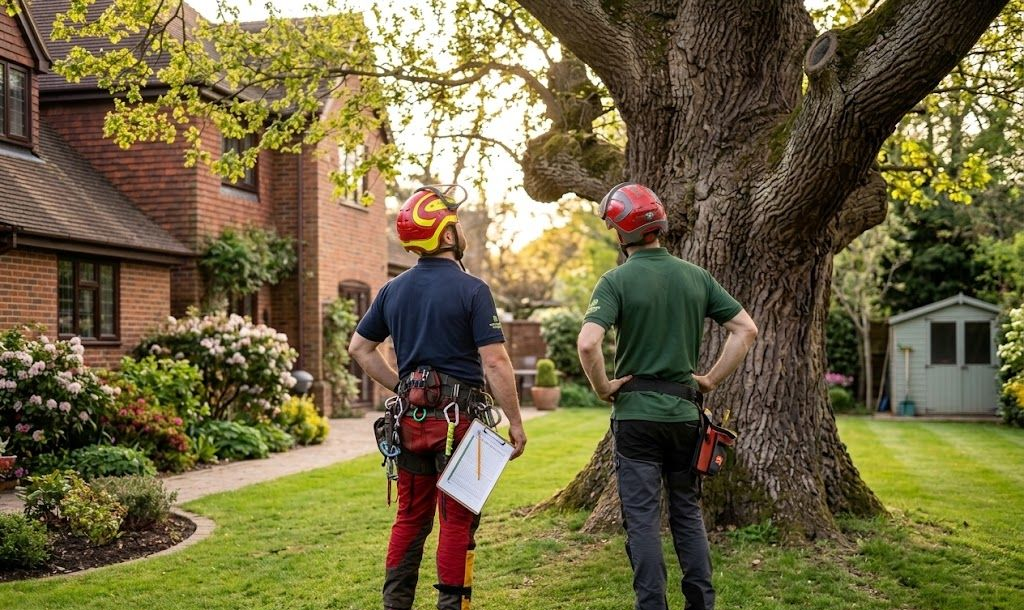
Trees near homes, driveways, and walkways must be evaluated for safety. Certified arborists are trained in tree risk assessment, which involves:
- Evaluating trunk and branch structure
- Identifying decay or defects
- Assessing root stability
- Considering site conditions and targets
- Recommending mitigation strategies
This process helps property owners address risks proactively rather than reacting to emergencies after damage occurs.
Protecting Property Value Through Professional Tree Care
Healthy, well-maintained trees add measurable value to properties. Conversely, neglected or poorly maintained trees can:
- Reduce curb appeal
- Increase liability risks
- Cause costly damage
- Deter buyers or tenants
Certified arborists focus on long-term tree health, helping landscapes mature gracefully rather than decline prematurely.
The Role of Arborists in Landscape Design and Construction
Tree care should not be an afterthought in landscape projects. Arborists play a critical role in:
- Evaluating existing trees before construction
- Protecting root zones during grading
- Recommending suitable plant placement
- Coordinating pruning with new installations
When arborist knowledge is integrated into design and construction, landscapes are more balanced, safer, and more sustainable.
For integrated services, homeowners can review [Arborist Services –
https://www.legacy-landscapecompany.com/arborist-services].
Disease and Pest Identification
Many tree problems are misdiagnosed by untrained providers. Certified arborists can accurately identify:
- Fungal diseases
- Insect infestations
- Nutrient deficiencies
- Environmental stress symptoms
Correct diagnosis prevents unnecessary treatments and ensures appropriate solutions are applied at the right time.
For research-based guidance, homeowners may reference the [UC IPM Tree Care Resources – https://ipm.ucanr.edu].
Water Management and Root Health
Improper watering is a leading cause of tree decline in Southern California. Certified arborists understand:
- Species-specific water needs
- Soil infiltration rates
- Root oxygen requirements
- Signs of overwatering or drought stress
This expertise is especially important in Fountain Valley, where irrigation systems must balance water conservation with plant health.
Safety and Insurance Considerations
Tree work is inherently hazardous. Certified arborists are trained in:
- Proper equipment use
- Climbing and rigging techniques
- Hazard awareness
- Industry safety protocols
Professional arborist services also carry appropriate insurance, protecting homeowners from liability in the event of accidents or property damage.
Long-Term Tree Care Planning
Certified arborists take a proactive approach to tree management by:
- Creating pruning cycles
- Monitoring tree health over time
- Anticipating growth patterns
- Recommending preventive care
This long-term perspective helps trees remain assets rather than liabilities.
Common Misconceptions About Tree Care
“Any landscaper can trim trees”
Tree care requires specialized training. Landscapers may maintain plants, but arborists focus on tree biology and safety.
“More pruning is better”
Excessive pruning weakens trees and increases stress.
“Trees heal like people”
Trees do not heal wounds; they compartmentalize damage. Proper cuts are essential.
Frequently Asked Questions
How do I know if an arborist is certified?
Ask for certification credentials and verify them through the International Society of Arboriculture.
Is arborist care only for large trees?
No. Young and small trees benefit greatly from proper early care.
How often should trees be evaluated?
Most trees benefit from professional evaluation every 1–3 years, depending on age and location.
Are certified arborists more expensive?
While expertise may cost more upfront, it often saves money by preventing damage and premature tree loss.
Final Thoughts
Hiring a certified arborist
is an investment in safety, longevity, and landscape value. In Fountain Valley, where trees play a vital role in both aesthetics and comfort, professional arborist care ensures those benefits last for generations.
To learn more about professional tree care and evaluation, homeowners can explore [https://www.legacy-landscapecompany.com/tree-risk-assessment-and-isa-certifications].
Recent Posts