Tree Risk Assessment in Orange County: What It Is and When You Need One
When to Get a Tree Inspected to Protect Your Safety and Landscape
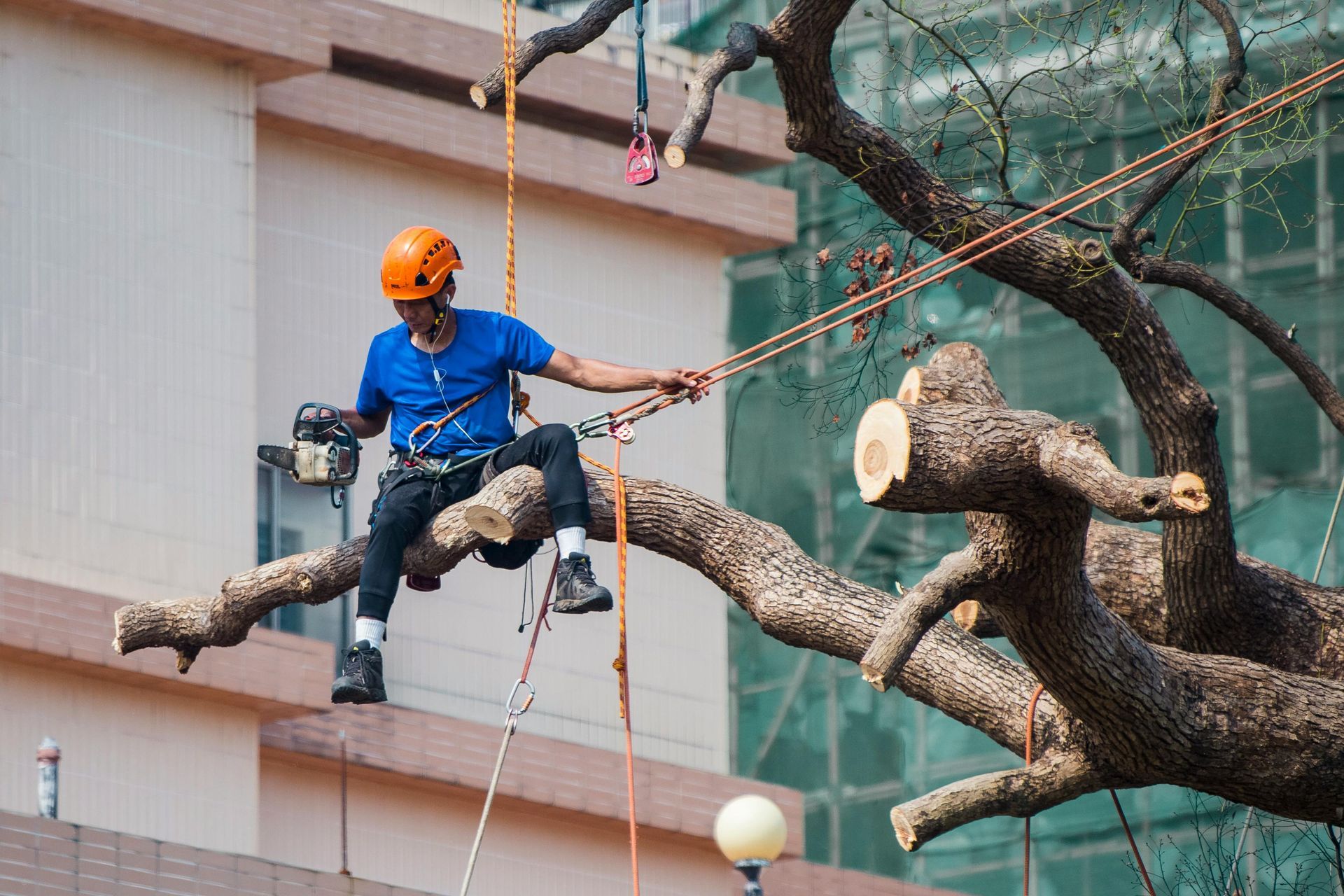
Trees add beauty, shade, and value to properties across Orange County—but when trees are damaged, stressed, or structurally compromised, they can also pose serious safety risks. Falling limbs, uprooted trees, and hidden decay are among the leading causes of property damage and personal injury related to landscapes. This is where a
tree risk assessment becomes essential.
A professional tree risk assessment evaluates the likelihood that a tree or part of a tree could fail and cause harm. In Orange County, where mature trees often exist close to homes, sidewalks, vehicles, and businesses, proactive evaluation is far safer and more cost-effective than responding after an incident occurs.
This guide explains what tree risk assessment involves, when it’s needed, how it’s performed, and why working with a qualified arborist matters—especially for property owners in Fountain Valley and surrounding communities.
What Is a Tree Risk Assessment?
A tree risk assessment is a structured evaluation performed by a trained arborist to determine:
- The condition of a tree
- The likelihood of failure
- The potential consequences if failure occurs
The goal is not to remove trees unnecessarily, but to identify and manage risk responsibly while preserving tree health whenever possible.
Tree risk assessment follows established industry standards developed by the International Society of Arboriculture and relies on professional judgment grounded in arboricultural science.
Why Tree Risk Assessment Is Important in Orange County
Orange County properties face unique challenges that increase the importance of professional evaluation, including:
- Coastal winds and storm systems
- Compact urban development
- Aging tree populations
- Limited root space
- Drought stress and water restrictions
In cities like
Fountain Valley, trees are often located near homes, streets, schools, and commercial buildings. Even a healthy-looking tree can have internal defects that are not visible to untrained eyes.
Tree risk assessment helps property owners make informed decisions before damage or injury occurs.
When You Should Schedule a Tree Risk Assessment
While any tree can benefit from evaluation, certain situations make assessment especially important.
After Storms or High Winds
Strong winds can:
- Crack branches
- Weaken attachment points
- Shift root systems
- Expose existing decay
Even if a tree remains standing, hidden damage may increase the likelihood of future failure.
When Trees Are Near Structures or High-Traffic Areas
Trees located near:
- Homes
- Driveways
- Sidewalks
- Parking areas
- Playgrounds
pose higher consequences if failure occurs. Risk assessments prioritize trees with significant “targets” beneath them.
Visible Signs of Tree Decline
Warning signs include:
- Dead or hanging branches
- Cracks in trunks or major limbs
- Leaning trees
- Mushrooms or fungal growth at the base
- Cavities or hollow areas
- Sparse foliage or dieback
These symptoms don’t always mean a tree must be removed, but they do warrant professional evaluation.
Before Construction or Landscape Changes
Grading, trenching, and hardscape installation can damage root systems. Tree risk assessments help determine:
- Which trees can be preserved
- How to protect root zones
- Whether mitigation pruning is needed
This is especially important during landscape design and construction projects.
How a Professional Tree Risk Assessment Is Performed
Visual Tree Assessment (VTA)
The first step is a detailed visual inspection, including:
- Tree species and age
- Canopy density and structure
- Branch attachment angles
- Trunk condition
- Root flare visibility
- Soil conditions
Experienced arborists can detect subtle indicators of weakness that homeowners often overlook.
Structural Evaluation
Structural assessment focuses on:
- Load distribution
- Included bark or weak unions
- Past pruning wounds
- Signs of internal decay
This analysis helps determine whether a tree’s structure can safely support its canopy under normal and adverse conditions.
Site and Target Assessment
Arborists evaluate what the tree could impact if failure occurs, including:
- Buildings
- Vehicles
- Pedestrians
- Utilities
Risk is always a combination of likelihood of failure and severity of impact.
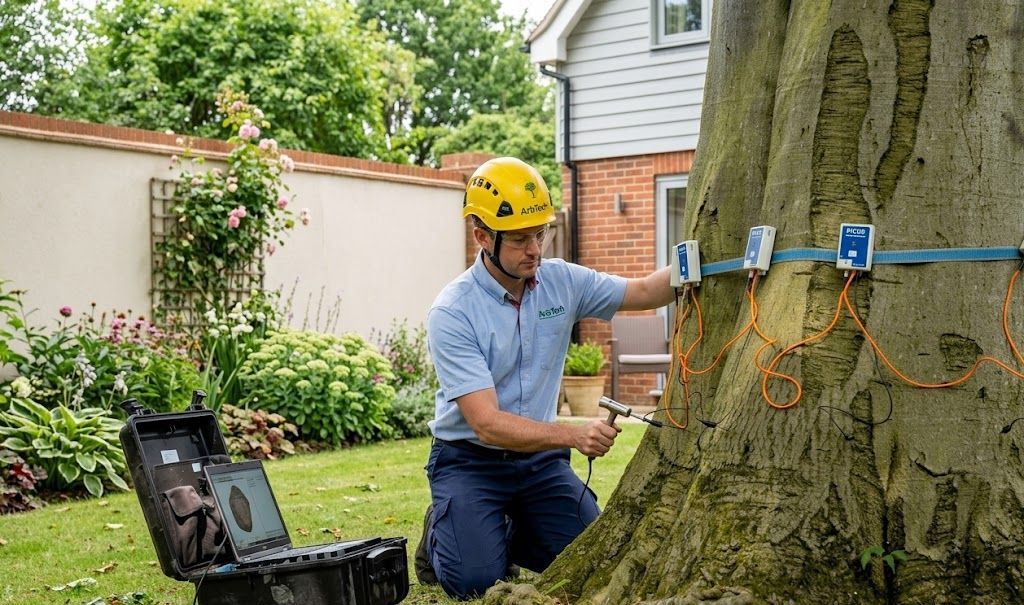
Advanced Diagnostic Tools (When Needed)
In some cases, arborists may use:
- Resistance drilling
- Air spade root inspections
- Soil analysis
- Binocular or aerial inspections
These tools provide deeper insight when visual evaluation alone is insufficient.
Tree Risk Levels Explained
Tree risk assessments typically classify risk into categories such as:
- Low
- Moderate
- High
- Extreme
These categories help property owners prioritize actions and understand urgency. Importantly, risk does not equal removal. Many risks can be reduced through proper pruning, cabling, or site modifications.
Common Mitigation Recommendations
Based on findings, arborists may recommend:
- Structural pruning
- Deadwood removal
- Cabling or bracing
- Soil and root care
- Irrigation adjustments
- Monitoring over time
- Tree removal (only when necessary)
The goal is always to
reduce risk while preserving tree health and value whenever feasible.
Legal and Liability Considerations
Property owners have a responsibility to maintain safe conditions. If a hazardous tree fails and causes damage or injury, liability may fall on the property owner—especially if warning signs were visible and ignored.
A professional tree risk assessment:
- Demonstrates due diligence
- Provides documented recommendations
- Helps reduce liability exposure
- Supports insurance or legal claims when needed
Tree Risk Assessment vs. Tree Removal
Many people assume a risk assessment automatically leads to tree removal. In reality, most assessments result in
corrective care, not removal.
Removal is typically recommended only when:
- Structural failure is highly likely
- Mitigation is not feasible
- The tree poses unacceptable risk
- Health has declined beyond recovery
Preserving healthy trees is almost always preferable when safety allows.
The Importance of Certified Arborist Expertise
Tree risk assessment requires specialized training. Certified arborists understand:
- Tree biomechanics
- Species-specific behavior
- Failure patterns
- Industry standards
Working with trained professionals ensures evaluations are accurate, unbiased, and rooted in science—not guesswork.
For professional evaluation services, property owners can review [Tree Risk Assessment Services – https://www.legacylandscapecompany.com].
How Often Should Trees Be Assessed?
General guidelines include:
- Every 1–3 years for mature trees
- After major storms
- Before construction projects
- When visible changes occur
- When trees age or outgrow their space
Regular assessments help catch issues early, when solutions are simpler and more affordable.
Frequently Asked Questions
Is a tree risk assessment required by law?
While not always required, assessments may be recommended by municipalities, HOAs, or insurance providers.
How long does a tree risk assessment take?
Most residential assessments take 30–60 minutes per tree, depending on size and complexity.
Will I receive documentation?
Professional assessments typically include written findings and recommendations.
Are all trees in Orange County high risk?
No. Many trees are healthy and stable. Assessments help confirm safety and identify exceptions.
Final Thoughts
Tree risk assessment is a proactive approach to protecting people, property, and valuable landscape assets. In Orange County, where mature trees and urban environments intersect, professional evaluation provides peace of mind and responsible stewardship.
Homeowners and property managers interested in expert evaluation can explore [Arborist Services – https://www.legacylandscapecompany.com] to learn more about certified assessment options.
Recent Posts